Introduction
The Enterprise Technology Revolution: How AI and Intelligent Systems Are Reshaping Business in 2026
The technology landscape is experiencing a seismic shift as we move through 2026, with artificial intelligence no longer serving as a supplementary tool but rather as the fundamental infrastructure upon which modern enterprises are built. This transformation represents more than incremental progress—it marks a complete reimagining of how organizations design, deploy, and manage their technological ecosystems. From the rise of intent-driven development paradigms to the emergence of autonomous operational systems, businesses are navigating a complex array of innovations that promise to redefine competitive advantage in the digital economy.
AI as Foundational Infrastructure: Beyond the Hype
The evolution of artificial intelligence from experimental technology to core infrastructure represents one of the most significant shifts in enterprise computing history. Organizations are no longer asking whether to adopt AI, but rather how deeply to integrate it into every layer of their technological stack.
This transformation manifests in several critical ways:
- Embedded intelligence: AI capabilities are being woven directly into databases, networking equipment, and storage systems rather than existing as separate applications
- Automated decision-making: Systems now make thousands of micro-decisions daily without human intervention, from resource allocation to security responses
- Predictive architecture: Infrastructure that anticipates needs and adjusts configurations before issues arise
- Self-healing systems: Technology stacks that detect, diagnose, and resolve problems autonomously
The implications extend far beyond efficiency gains. Organizations with AI-native architectures are discovering fundamentally new ways to create value, respond to market changes, and serve customers. The competitive gap between companies that have successfully implemented this foundational shift and those still treating AI as an add-on is widening rapidly.
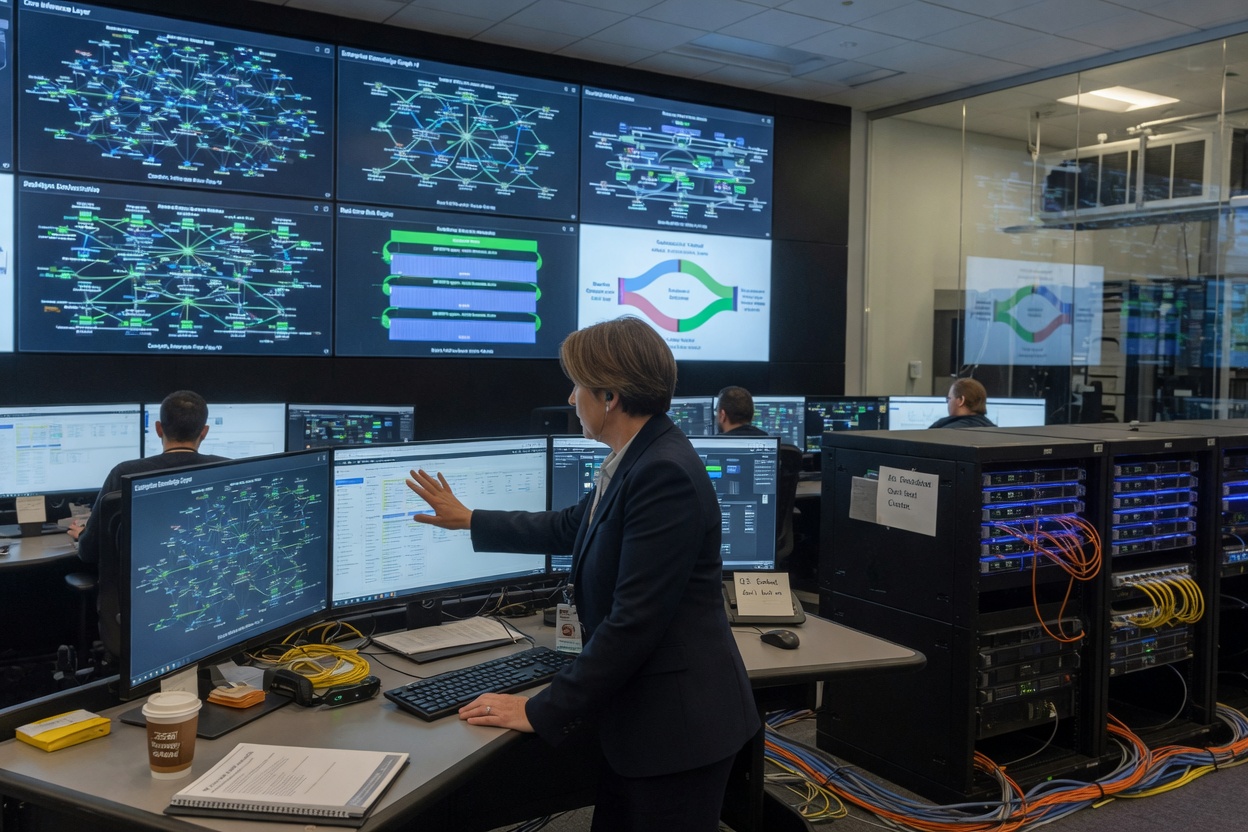
The Capgemini report “Top Tech Trends of 2026” identifies 2026 as a pivotal “year of truth” where organizations must move beyond experimentation to strengthen and rebuild the foundations for a decade of AI-driven transformation.https://t.co/jERdzvscdX
— daniel jeffrey koch (@danieljkoch) March 8, 2026
The Intent-Driven Development Paradigm
Perhaps the most revolutionary change in how software is created involves the shift toward intent-driven development, where developers describe desired outcomes rather than prescribing specific implementation steps. This approach fundamentally alters the relationship between human creativity and machine execution.
How Intent-Driven Development Works
In this new paradigm, developers articulate business objectives and system behaviors in natural language or high-level abstractions. AI systems then generate the underlying code, select appropriate architectures, and implement optimizations. This process doesn't eliminate the need for skilled developers—instead, it elevates their role from code crafters to strategic architects of business logic.
Key benefits include:
- Accelerated development cycles: Applications that previously took months to build now emerge in weeks or days
- Reduced technical debt: AI-generated code follows consistent patterns and best practices
- Enhanced maintainability: Systems that can explain their own logic and suggest improvements
- Democratized development: Non-technical stakeholders can contribute more directly to solution design
However, this shift also introduces new challenges. Organizations must develop robust frameworks for validating AI-generated code, ensuring security standards are maintained, and preserving institutional knowledge about system internals. The most successful enterprises are those that view intent-driven development as a collaborative partnership between human insight and machine capability.
Cloud Ecosystem Diversification: The Multi-Cloud Reality
The concept of cloud diversification has evolved from a risk management strategy to an operational necessity. Organizations in 2026 are orchestrating complex ecosystems spanning multiple cloud providers, edge computing resources, and on-premises infrastructure, all unified through intelligent management layers.
Strategic Drivers of Cloud Diversification
Several forces are pushing enterprises toward more distributed cloud strategies:
Regulatory compliance: Different jurisdictions impose varying requirements for data residency and processing, necessitating geographically diverse infrastructure
Risk mitigation: Dependence on a single cloud provider creates unacceptable vulnerability to outages, pricing changes, or strategic shifts
Optimal service selection: Each major cloud provider excels in different areas, and sophisticated organizations cherry-pick best-of-breed services
Cost optimization: Intelligent workload placement across providers can yield significant savings while maintaining performance
The technical complexity of managing these heterogeneous environments has been tamed by AI-powered orchestration platforms that automatically route workloads, balance costs, ensure compliance, and maintain performance standards across the entire ecosystem.

Top #Tech Trends of 2026- #technology leadership in 2026 is no longer abt experimentation,but abt constructing durable foundations for future #innovation–@Capgemini#Bigdata #ArtificialIntelligence #Fintech #AI #Regulation #Regtech@bamitav @mikeflachehttps://t.co/A7dOROMnIa pic.twitter.com/bugmYGBspI
— Nafis Alam (@nafisalam) January 24, 2026
Intelligent Operations and Autonomous Agents
The emergence of AI agents capable of managing operational tasks represents a quantum leap beyond traditional automation. These intelligent systems don't merely execute predefined scripts—they understand context, make judgment calls, and continuously learn from outcomes.
The Autonomous Operations Landscape
Modern enterprises are deploying AI agents across numerous operational domains:
- Infrastructure management: Agents that provision resources, optimize configurations, and predict capacity needs
- Security operations: Autonomous systems that detect threats, contain breaches, and adapt defenses in real-time
- Customer service: Intelligent agents handling complex inquiries and escalating only when human judgment is truly required
- Supply chain optimization: Systems that dynamically adjust logistics, inventory, and sourcing based on global signals
The sophistication of these agents extends to their ability to collaborate with each other, forming networks of specialized intelligences that collectively manage enterprise operations. A security agent might consult with an infrastructure agent to implement protective measures, while a customer service agent coordinates with supply chain systems to provide accurate delivery information.
This shift toward autonomous operations doesn't eliminate human roles but transforms them. IT professionals are becoming supervisors of intelligent systems, focusing on strategic direction, ethical oversight, and handling edge cases that require human judgment and creativity.
Technology Sovereignty and Strategic Independence
As technology becomes the primary determinant of competitive success, questions of tech sovereignty have moved from academic discussions to boardroom priorities. Organizations are grappling with their dependence on external technology providers and considering what capabilities must be developed or controlled internally.
Dimensions of Technology Sovereignty
The sovereignty challenge manifests across multiple layers:
Data sovereignty: Ensuring control over where data resides, who can access it, and under what legal frameworks
Algorithmic independence: Reducing reliance on proprietary AI models whose internal logic remains opaque
Infrastructure autonomy: Maintaining the ability to operate critical systems even if external providers become unavailable
Talent sovereignty: Developing internal expertise rather than complete dependence on vendor specialists
Forward-thinking organizations are pursuing balanced strategies that leverage external innovations while building core competencies in areas critical to their competitive positioning. This might mean using commercial cloud services for commodity workloads while developing proprietary AI models for customer-facing differentiators.
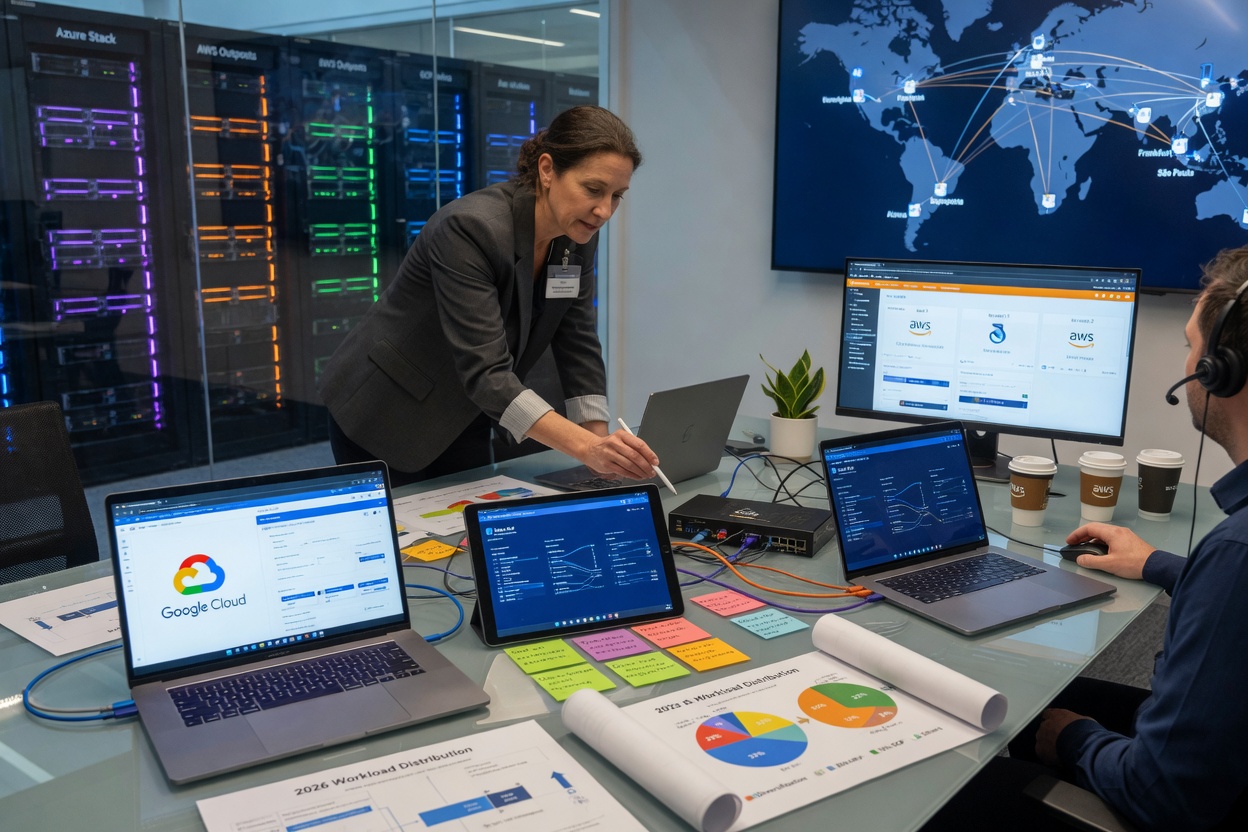
Top Tech Trends 2026
Capgemini highlights AI, cloud and cybersecurity as 2026’s key trends. #TechTrends #AI #Cloud #Cybersecurity
— AI2099 (@Ai20991923) December 11, 2025
Preparing for the Intelligent Enterprise Future
The convergence of these trends—foundational AI, intent-driven development, diversified cloud ecosystems, autonomous operations, and technology sovereignty—is creating a new category of organization: the intelligent enterprise. These businesses don't simply use technology; they're built on it, with AI and automation forming their nervous system.
Organizations successfully navigating this transformation share common characteristics:
- Cultural adaptability: Willingness to fundamentally rethink processes and roles
- Strategic investment: Commitment to long-term capability building rather than short-term fixes
- Ethical frameworks: Clear principles governing AI use, data handling, and automation boundaries
- Continuous learning: Systems and people that evolve together as technology advances
Conclusion
The technology landscape of 2026 represents not merely an evolution but a revolution in how enterprises conceive of and deploy their digital capabilities. AI has transcended its role as a tool to become the foundational layer upon which modern business operates. Intent-driven development is accelerating innovation while reshaping the developer's role. Cloud ecosystems are growing more diverse and intelligent in their orchestration. Autonomous agents are assuming operational responsibilities previously requiring human attention. And questions of technology sovereignty are forcing strategic choices about dependence and control.
Organizations that recognize these shifts as opportunities rather than threats—that invest in building intelligent, adaptive, sovereign technology capabilities—will define the competitive landscape for years to come. The intelligent enterprise era has arrived, and the gap between leaders and laggards will only widen as these technologies mature and compound their effects. The question facing every organization is not whether to embrace this transformation, but how quickly and comprehensively they can execute it.
Leave a Reply