Author: ainewstoday-0iun

  • Choosing the Right AI Coding Assistant: A Strategic Guide for Development Teams in 2026

    Introduction

    Choosing the Right AI Coding Assistant: A Strategic Guide for Development Teams in 2026

    The landscape of AI-powered development tools has evolved dramatically, transforming from simple code completion plugins into sophisticated programming partners capable of understanding context, debugging complex systems, and architecting entire features. As we navigate through 2026, the challenge for development teams isn't whether to adopt AI coding tools—it's determining which tools align best with their specific workflows, project complexity, and team dynamics.

    The Evolution of AI Coding Assistance

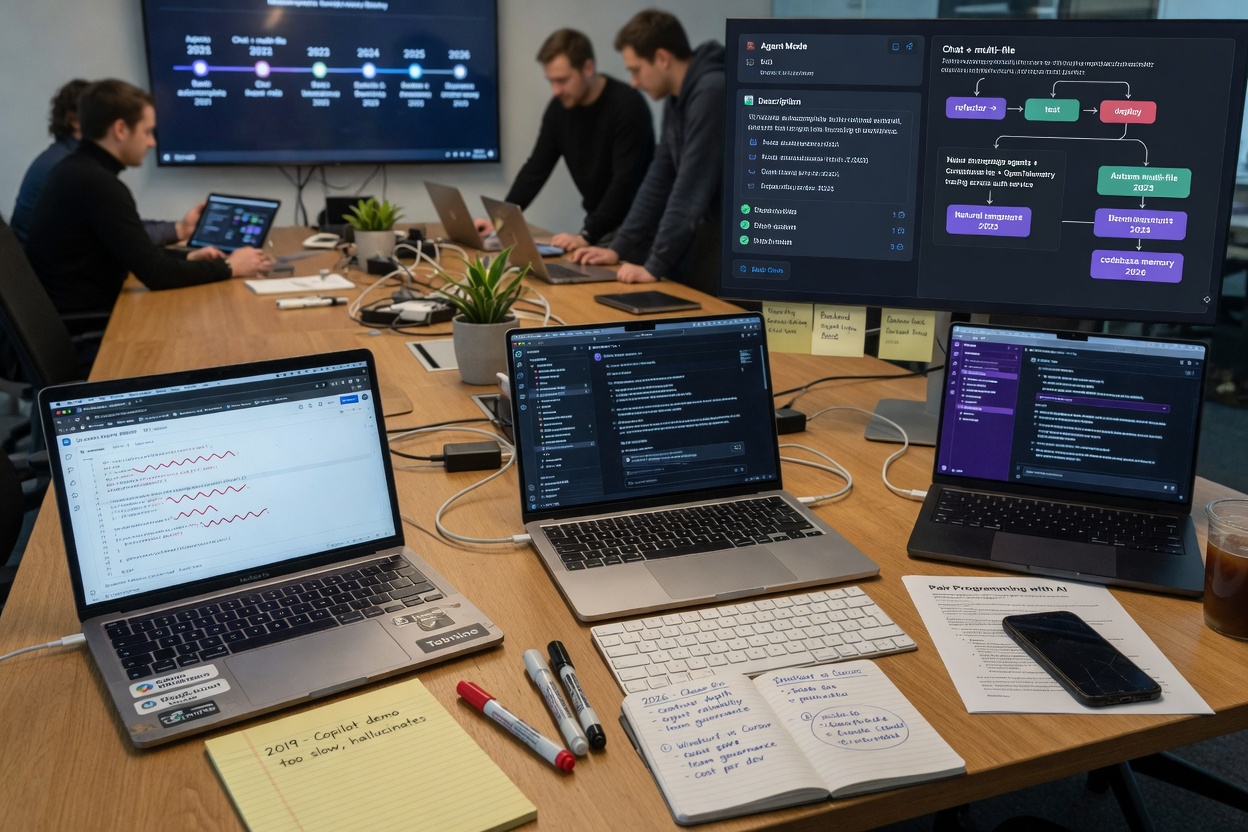
    Modern AI coding assistants have moved far beyond their autocomplete origins. Today's tools leverage large language models (LLMs) trained on billions of lines of code, enabling them to understand programming patterns, identify bugs, suggest optimizations, and even explain legacy code that has puzzled developers for years.

    The current generation of AI coding tools demonstrates remarkable capabilities:

    • Contextual awareness spanning entire repositories rather than single files
    • Multi-language proficiency across dozens of programming languages and frameworks
    • Intelligent debugging that identifies root causes rather than just symptoms
    • Architecture suggestions informed by best practices and design patterns
    • Documentation generation that maintains consistency with code changes

    This shift represents a fundamental change in how developers interact with their tools. Instead of searching Stack Overflow or documentation, developers can now engage in conversational problem-solving with AI assistants that understand their specific codebase.
    Illustration

    Key Performance Metrics That Actually Matter

    When evaluating AI coding tools, benchmark scores provide useful data points, but real-world performance encompasses much more than raw test results. Development teams should consider multiple dimensions:

    Code Quality and Correctness

    SWE-bench (Software Engineering Benchmark) has emerged as a gold standard for evaluating AI coding tools. This benchmark tests tools against real GitHub issues, measuring their ability to generate pull requests that actually resolve problems. However, teams should also consider:

    • The frequency of hallucinations or confidently incorrect suggestions
    • Whether generated code follows security best practices
    • Consistency with existing code style and architectural patterns
    • The tool's ability to recognize when it doesn't know something

    Context Window and Repository Understanding

    For teams working with large codebases, the ability to maintain context across thousands of files becomes critical. Tools with larger context windows can:

    • Understand dependencies between distant parts of the codebase
    • Make refactoring suggestions that account for all affected components
    • Generate code that integrates seamlessly with existing systems
    • Provide more accurate answers about system behavior

    Speed and Developer Experience

    The best AI tool is worthless if it disrupts flow state. Consider:

    • Response latency for inline suggestions
    • Time required to generate longer code blocks
    • Integration smoothness with existing IDEs and workflows
    • Learning curve for team adoption

    Strategic Tool Selection Based on Team Needs

    Different development contexts demand different AI coding solutions. Rather than declaring a universal "best" tool, teams should match capabilities to requirements.

    For Enterprise Teams with Legacy Systems

    Organizations maintaining large, complex codebases benefit most from tools offering:

    • Extensive context windows to navigate interconnected systems
    • Strong performance on real-world problem-solving benchmarks
    • Enterprise security features including on-premises deployment options
    • Support for legacy programming languages and frameworks

    These teams should prioritize tools that excel at understanding and explaining existing code over those optimized for greenfield development. The ability to quickly onboard new developers by explaining legacy systems can provide tremendous value.

    For Startups and Rapid Prototyping

    Teams prioritizing speed and iteration benefit from tools offering:

    • Fast inline code completion for common patterns
    • Strong support for modern frameworks and languages
    • Quick setup with minimal configuration
    • Affordable pricing for small teams

    The emphasis here shifts toward developer velocity and reduced friction. The best tool is one that gets out of the way while accelerating common tasks.

    For Solo Developers and Freelancers

    Individual developers have different constraints and opportunities:

    • Budget considerations that favor free tiers or competitive pricing
    • Flexibility to experiment with multiple tools
    • Desire for broad language support across varied projects
    • Less concern about team-wide standardization
    Illustration

    The Hidden Costs of AI Coding Tools

    Beyond subscription fees, teams should account for:

    Training and Adaptation Time: Even intuitive tools require teams to develop effective prompting strategies and learn when to trust or verify suggestions.

    Code Review Overhead: AI-generated code still requires human review, potentially creating bottlenecks if not properly managed. Teams need processes for efficiently reviewing and validating AI contributions.

    Dependency Risk: Heavy reliance on specific AI tools creates switching costs and potential vulnerabilities if service quality degrades or pricing changes dramatically.

    Security Considerations: Tools that transmit code to external servers raise questions about intellectual property protection and compliance with security policies.

    Emerging Trends Shaping the Future

    The AI coding tool landscape continues evolving rapidly. Several trends warrant attention:

    Specialized Domain Models: Rather than general-purpose coding assistants, we're seeing tools optimized for specific frameworks, languages, or problem domains. These specialized tools often outperform generalists in their niches.

    Agentic Coding Systems: Beyond single-task assistance, emerging tools can autonomously plan and execute multi-step development tasks, from initial design through testing and deployment.

    Collaborative AI: Next-generation tools understand team dynamics, maintaining context across multiple developers and suggesting coordination strategies for complex features.

    Customizable Models: Organizations are beginning to fine-tune base models on their internal codebases, creating AI assistants deeply familiar with company-specific patterns and practices.
    Illustration

    Making the Decision

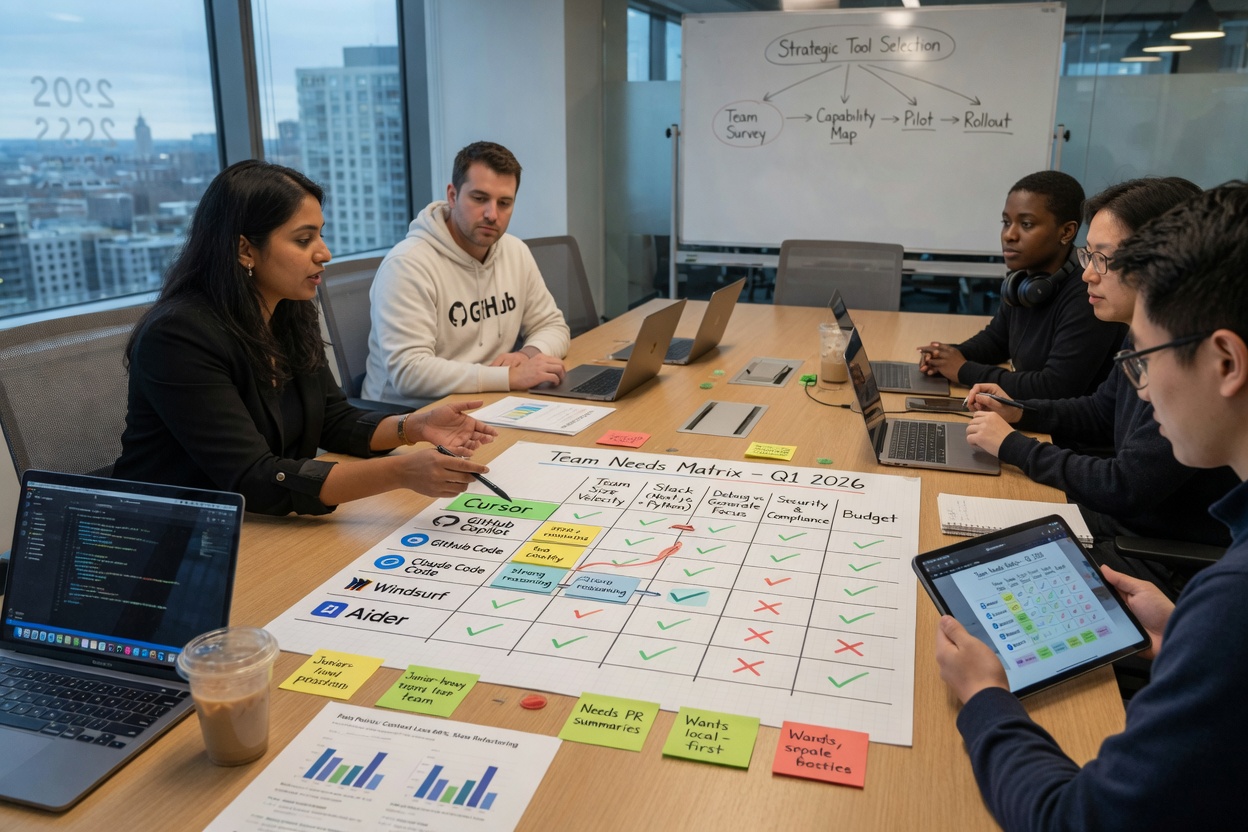
    Rather than chasing benchmark rankings, successful teams approach tool selection systematically:

    1. Audit current pain points: Where do developers lose time? What types of tasks cause frustration?

    2. Trial multiple options: Most tools offer free trials. Test with real work, not toy problems.

    3. Gather team feedback: Different developers may prefer different tools. Consider their input seriously.

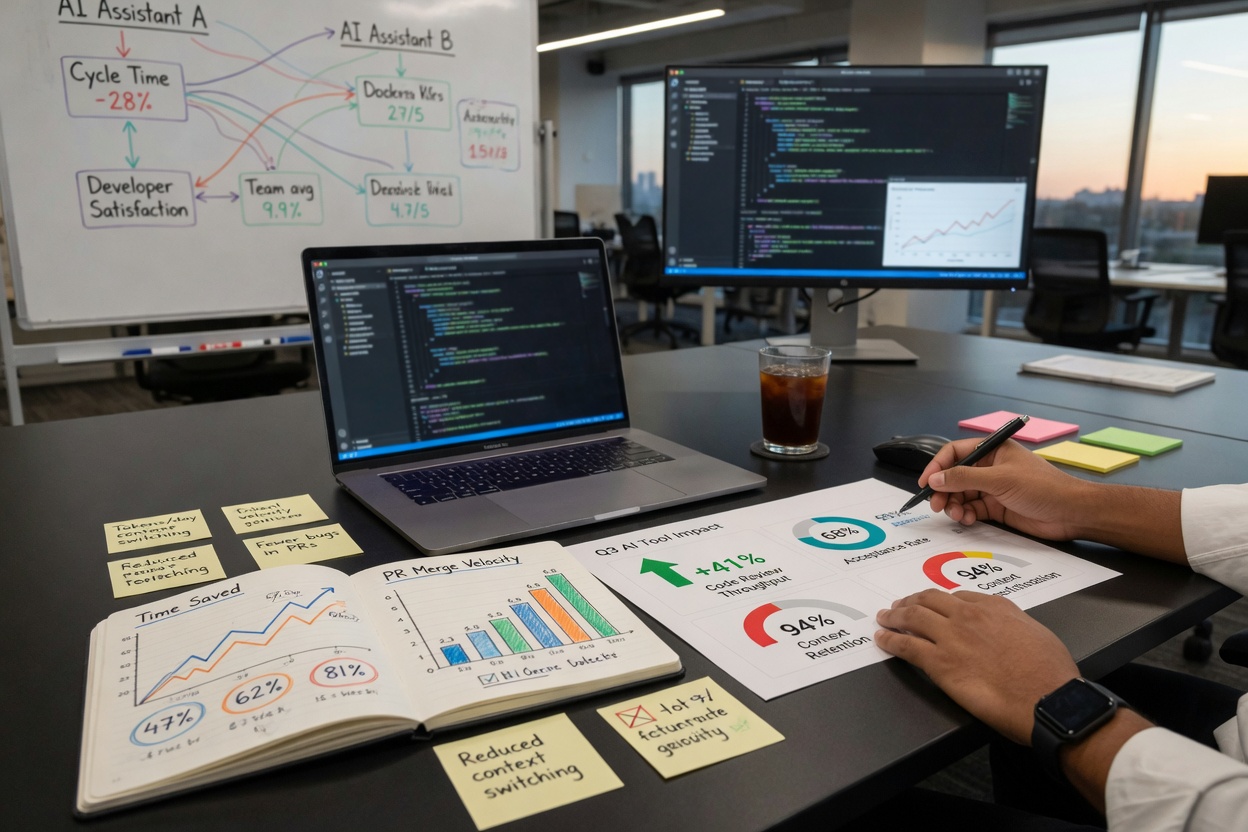
    4. Measure impact: Track metrics like pull request velocity, bug rates, and developer satisfaction before and after adoption.

    5. Plan for evolution: The AI tool landscape will continue changing. Build flexibility into your selection rather than committing irreversibly to a single vendor.

    Conclusion

    The best AI coding tool for your team depends entirely on your specific context—the size and complexity of your codebase, your team's experience level, your budget constraints, and your development priorities. While benchmark performance and feature checklists provide useful information, the real test is how tools perform within your actual workflow.

    The organizations seeing the greatest benefit from AI coding assistance are those that treat tool adoption as a strategic initiative rather than simply licensing software. They invest in training, establish best practices for AI collaboration, and continuously evaluate whether their tools are delivering value. As these technologies continue maturing, the competitive advantage will belong not to teams using the "best" tool, but to those using their chosen tools most effectively.

  • The Enterprise Technology Revolution: How AI and Intelligent Systems Are Reshaping Business in 2026

    Introduction

    The Enterprise Technology Revolution: How AI and Intelligent Systems Are Reshaping Business in 2026

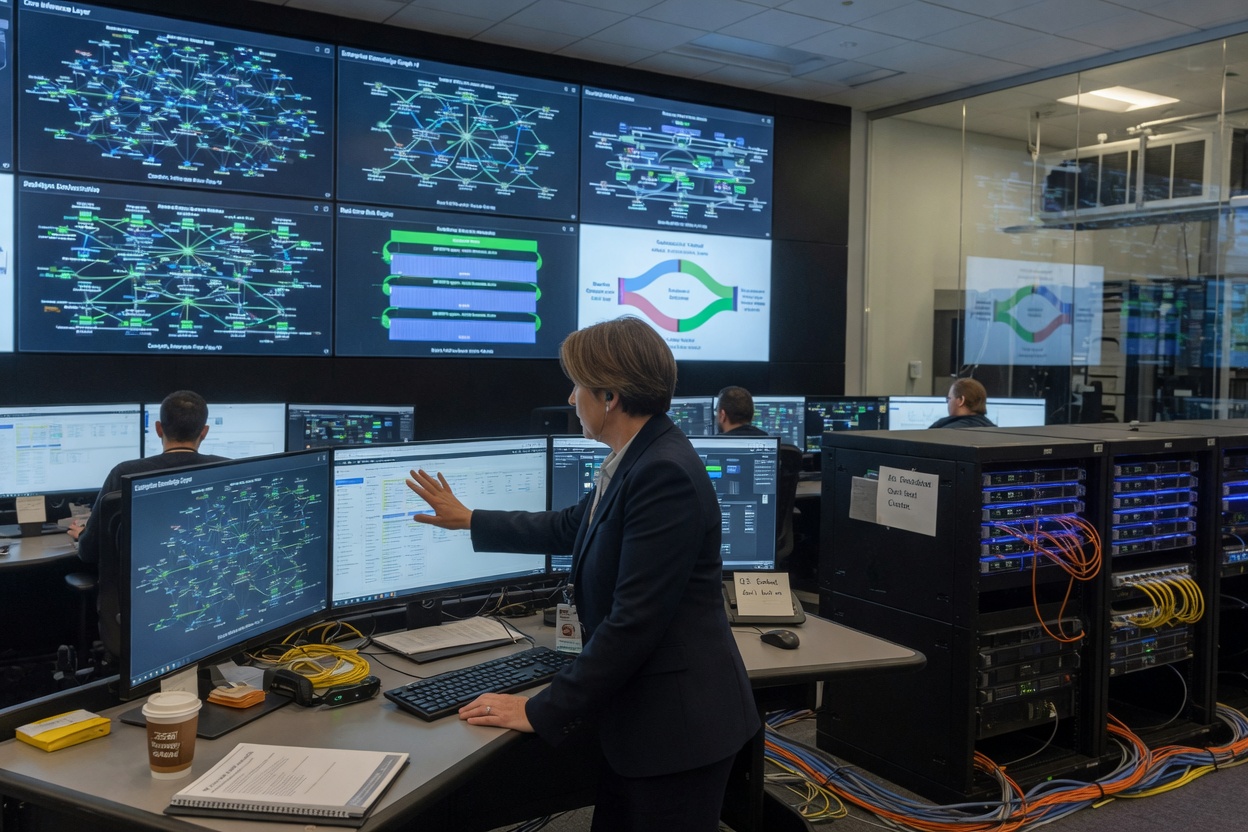
    The technology landscape is experiencing a seismic shift as we move through 2026, with artificial intelligence no longer serving as a supplementary tool but rather as the fundamental infrastructure upon which modern enterprises are built. This transformation represents more than incremental progress—it marks a complete reimagining of how organizations design, deploy, and manage their technological ecosystems. From the rise of intent-driven development paradigms to the emergence of autonomous operational systems, businesses are navigating a complex array of innovations that promise to redefine competitive advantage in the digital economy.

    AI as Foundational Infrastructure: Beyond the Hype

    The evolution of artificial intelligence from experimental technology to core infrastructure represents one of the most significant shifts in enterprise computing history. Organizations are no longer asking whether to adopt AI, but rather how deeply to integrate it into every layer of their technological stack.

    This transformation manifests in several critical ways:

    • Embedded intelligence: AI capabilities are being woven directly into databases, networking equipment, and storage systems rather than existing as separate applications
    • Automated decision-making: Systems now make thousands of micro-decisions daily without human intervention, from resource allocation to security responses
    • Predictive architecture: Infrastructure that anticipates needs and adjusts configurations before issues arise
    • Self-healing systems: Technology stacks that detect, diagnose, and resolve problems autonomously

    The implications extend far beyond efficiency gains. Organizations with AI-native architectures are discovering fundamentally new ways to create value, respond to market changes, and serve customers. The competitive gap between companies that have successfully implemented this foundational shift and those still treating AI as an add-on is widening rapidly.

    Illustration

    The Intent-Driven Development Paradigm

    Perhaps the most revolutionary change in how software is created involves the shift toward intent-driven development, where developers describe desired outcomes rather than prescribing specific implementation steps. This approach fundamentally alters the relationship between human creativity and machine execution.

    How Intent-Driven Development Works

    In this new paradigm, developers articulate business objectives and system behaviors in natural language or high-level abstractions. AI systems then generate the underlying code, select appropriate architectures, and implement optimizations. This process doesn't eliminate the need for skilled developers—instead, it elevates their role from code crafters to strategic architects of business logic.

    Key benefits include:

    • Accelerated development cycles: Applications that previously took months to build now emerge in weeks or days
    • Reduced technical debt: AI-generated code follows consistent patterns and best practices
    • Enhanced maintainability: Systems that can explain their own logic and suggest improvements
    • Democratized development: Non-technical stakeholders can contribute more directly to solution design

    However, this shift also introduces new challenges. Organizations must develop robust frameworks for validating AI-generated code, ensuring security standards are maintained, and preserving institutional knowledge about system internals. The most successful enterprises are those that view intent-driven development as a collaborative partnership between human insight and machine capability.

    Cloud Ecosystem Diversification: The Multi-Cloud Reality

    The concept of cloud diversification has evolved from a risk management strategy to an operational necessity. Organizations in 2026 are orchestrating complex ecosystems spanning multiple cloud providers, edge computing resources, and on-premises infrastructure, all unified through intelligent management layers.

    Strategic Drivers of Cloud Diversification

    Several forces are pushing enterprises toward more distributed cloud strategies:

    Regulatory compliance: Different jurisdictions impose varying requirements for data residency and processing, necessitating geographically diverse infrastructure

    Risk mitigation: Dependence on a single cloud provider creates unacceptable vulnerability to outages, pricing changes, or strategic shifts

    Optimal service selection: Each major cloud provider excels in different areas, and sophisticated organizations cherry-pick best-of-breed services

    Cost optimization: Intelligent workload placement across providers can yield significant savings while maintaining performance

    The technical complexity of managing these heterogeneous environments has been tamed by AI-powered orchestration platforms that automatically route workloads, balance costs, ensure compliance, and maintain performance standards across the entire ecosystem.

    Illustration

    Intelligent Operations and Autonomous Agents

    The emergence of AI agents capable of managing operational tasks represents a quantum leap beyond traditional automation. These intelligent systems don't merely execute predefined scripts—they understand context, make judgment calls, and continuously learn from outcomes.

    The Autonomous Operations Landscape

    Modern enterprises are deploying AI agents across numerous operational domains:

    • Infrastructure management: Agents that provision resources, optimize configurations, and predict capacity needs
    • Security operations: Autonomous systems that detect threats, contain breaches, and adapt defenses in real-time
    • Customer service: Intelligent agents handling complex inquiries and escalating only when human judgment is truly required
    • Supply chain optimization: Systems that dynamically adjust logistics, inventory, and sourcing based on global signals

    The sophistication of these agents extends to their ability to collaborate with each other, forming networks of specialized intelligences that collectively manage enterprise operations. A security agent might consult with an infrastructure agent to implement protective measures, while a customer service agent coordinates with supply chain systems to provide accurate delivery information.

    This shift toward autonomous operations doesn't eliminate human roles but transforms them. IT professionals are becoming supervisors of intelligent systems, focusing on strategic direction, ethical oversight, and handling edge cases that require human judgment and creativity.

    Technology Sovereignty and Strategic Independence

    As technology becomes the primary determinant of competitive success, questions of tech sovereignty have moved from academic discussions to boardroom priorities. Organizations are grappling with their dependence on external technology providers and considering what capabilities must be developed or controlled internally.

    Dimensions of Technology Sovereignty

    The sovereignty challenge manifests across multiple layers:

    Data sovereignty: Ensuring control over where data resides, who can access it, and under what legal frameworks

    Algorithmic independence: Reducing reliance on proprietary AI models whose internal logic remains opaque

    Infrastructure autonomy: Maintaining the ability to operate critical systems even if external providers become unavailable

    Talent sovereignty: Developing internal expertise rather than complete dependence on vendor specialists

    Forward-thinking organizations are pursuing balanced strategies that leverage external innovations while building core competencies in areas critical to their competitive positioning. This might mean using commercial cloud services for commodity workloads while developing proprietary AI models for customer-facing differentiators.

    Illustration

    Preparing for the Intelligent Enterprise Future

    The convergence of these trends—foundational AI, intent-driven development, diversified cloud ecosystems, autonomous operations, and technology sovereignty—is creating a new category of organization: the intelligent enterprise. These businesses don't simply use technology; they're built on it, with AI and automation forming their nervous system.

    Organizations successfully navigating this transformation share common characteristics:

    • Cultural adaptability: Willingness to fundamentally rethink processes and roles
    • Strategic investment: Commitment to long-term capability building rather than short-term fixes
    • Ethical frameworks: Clear principles governing AI use, data handling, and automation boundaries
    • Continuous learning: Systems and people that evolve together as technology advances

    Conclusion

    The technology landscape of 2026 represents not merely an evolution but a revolution in how enterprises conceive of and deploy their digital capabilities. AI has transcended its role as a tool to become the foundational layer upon which modern business operates. Intent-driven development is accelerating innovation while reshaping the developer's role. Cloud ecosystems are growing more diverse and intelligent in their orchestration. Autonomous agents are assuming operational responsibilities previously requiring human attention. And questions of technology sovereignty are forcing strategic choices about dependence and control.

    Organizations that recognize these shifts as opportunities rather than threats—that invest in building intelligent, adaptive, sovereign technology capabilities—will define the competitive landscape for years to come. The intelligent enterprise era has arrived, and the gap between leaders and laggards will only widen as these technologies mature and compound their effects. The question facing every organization is not whether to embrace this transformation, but how quickly and comprehensively they can execute it.

  • Hello world!

    Welcome to WordPress. This is your first post. Edit or delete it, then start writing!