Introduction
Loop Engineering: A Modern Approach to Software Development and Continuous Improvement
The software development landscape is constantly evolving, requiring teams to adopt new methodologies and practices that promote efficiency, collaboration, and continuous improvement. Loop engineering represents a paradigm shift in how development teams approach the software lifecycle, emphasizing iterative processes, feedback mechanisms, and adaptive workflows that create self-reinforcing cycles of improvement.
Understanding the Core Concept of Loop Engineering
Loop engineering is fundamentally about creating cyclical processes that continuously feed information back into the development pipeline. Unlike traditional linear development approaches, loop engineering establishes feedback loops at multiple levels of the software development lifecycle. These loops enable teams to learn from each iteration, make data-driven decisions, and progressively refine their products and processes.
The concept draws inspiration from various methodologies including:
- Agile development practices that emphasize iterative delivery
- DevOps principles that unite development and operations
- Continuous integration and continuous deployment (CI/CD) pipelines
- Site Reliability Engineering (SRE) practices
- Lean manufacturing principles adapted for software
At its core, loop engineering recognizes that software development is not a one-way street from conception to deployment, but rather a continuous cycle of building, measuring, learning, and improving.
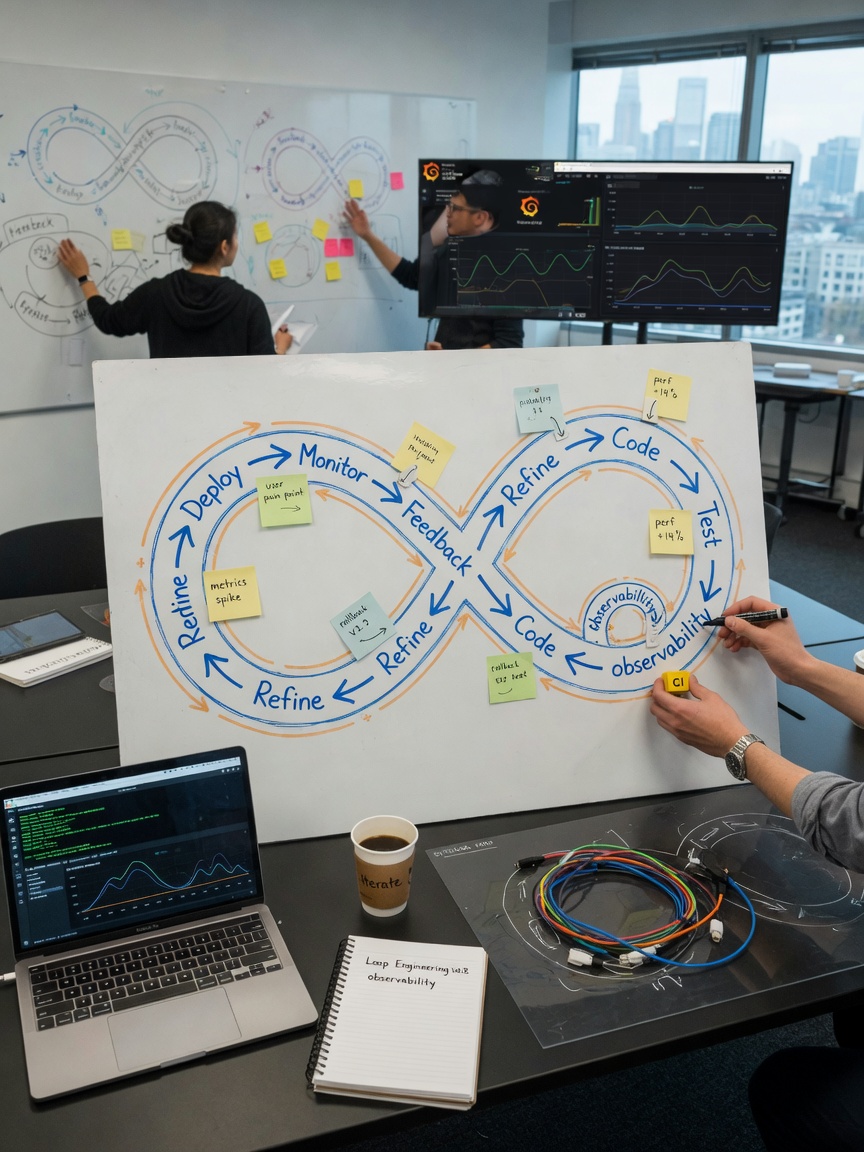
A six-word post broke the AI world open last week.
"You shouldn't be prompting agents anymore. You should be designing loops that prompt your agents." It hit 6.5 million views in days.The idea has a name now: loop engineering.
Here's the difference.Prompt engineering: you… pic.twitter.com/wcMDAlAwqV
— Success-Steps (@successstepss) June 17, 2026
The Fundamental Principles of Loop Engineering
Loop engineering operates on several key principles that distinguish it from traditional development approaches:
Continuous Feedback Integration: Every stage of development incorporates feedback mechanisms that inform subsequent iterations. This includes automated testing results, monitoring data, user feedback, and performance metrics.
Rapid Iteration Cycles: Instead of long development cycles, loop engineering favors shorter iterations that allow teams to respond quickly to changing requirements and discovered issues.
Data-Driven Decision Making: Decisions are based on observable metrics and concrete data rather than assumptions or intuition alone.
Cross-Functional Collaboration: Loop engineering breaks down silos between development, operations, quality assurance, and other teams, promoting shared responsibility and knowledge.
Automation as a Foundation: Automated processes reduce manual intervention, minimize errors, and accelerate feedback loops throughout the development lifecycle.
Implementing Feedback Loops Throughout the Development Lifecycle
The effectiveness of loop engineering depends on strategically implementing feedback loops at various stages:
Code Development Loops
At the most granular level, developers benefit from immediate feedback loops during coding:
- Integrated Development Environment (IDE) feedback providing real-time syntax checking and error detection
- Automated unit tests running locally before code commits
- Pre-commit hooks validating code quality and standards
- Pair programming and code reviews offering human feedback
These tight loops help developers catch and fix issues within minutes rather than days or weeks.
Build and Integration Loops
Once code is committed, additional loops activate:
- Continuous integration systems automatically building and testing code changes
- Automated test suites providing comprehensive coverage
- Static code analysis identifying potential vulnerabilities and code smells
- Integration testing ensuring components work together correctly
These loops typically complete within hours, providing rapid feedback on whether changes integrate successfully with the broader codebase.
Deployment and Operations Loops
Post-deployment, loop engineering continues through:
- Automated deployment pipelines reducing manual deployment risks
- Canary deployments and feature flags enabling controlled rollouts
- Real-time monitoring and alerting detecting production issues quickly
- Performance metrics and analytics measuring system behavior
These operational loops can provide feedback in real-time, enabling teams to respond to production issues within minutes.
User Experience and Product Loops
The outermost loops connect directly to end users:
- User analytics and behavior tracking revealing how features are actually used
- A/B testing frameworks comparing different approaches empirically
- Customer feedback channels capturing qualitative insights
- Product metrics measuring business outcomes
These loops help teams understand whether they're building the right things, not just building things right.
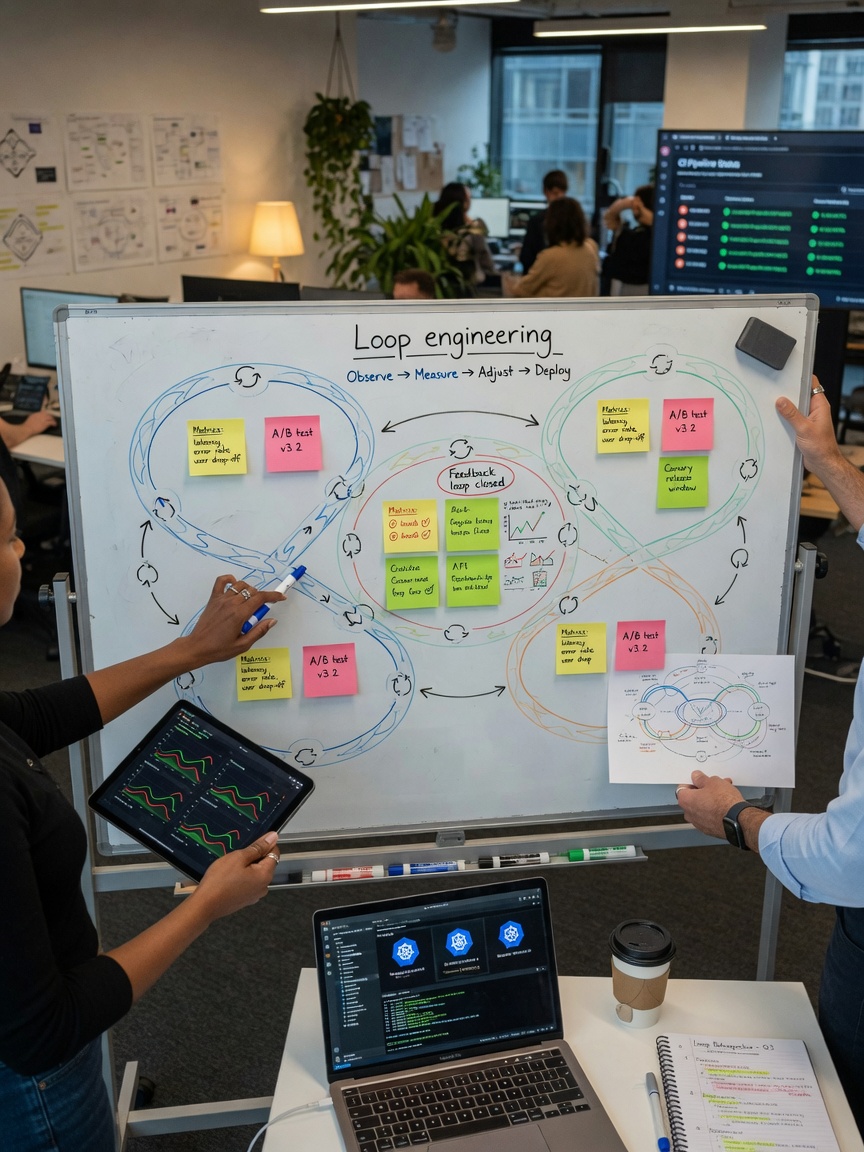
This is a fantastic article that breaks down Loop Engineering in a way that’s accessible even for non-technical folks. It perfectly connects to how I already use features in Codex and Claude every day—automations, skills, worktrees, sub-agents, and persistent memory—and shows how… https://t.co/0keXemOcmN
— Vivienne Su (@CurtainSue) June 10, 2026
Benefits of Adopting Loop Engineering Practices
Organizations that successfully implement loop engineering realize numerous advantages:
Faster Time to Market: Shorter feedback cycles and automated processes accelerate delivery of new features and fixes to production.
Higher Quality Software: Multiple layers of automated testing and continuous validation catch defects earlier when they're cheaper and easier to fix.
Improved Developer Productivity: Developers spend less time on manual tasks and waiting for feedback, focusing instead on creative problem-solving.
Better Risk Management: Incremental changes with rapid feedback reduce the risk of large-scale failures and make issues easier to diagnose and resolve.
Enhanced Team Morale: Clear feedback loops provide developers with tangible evidence of their impact and progress, increasing job satisfaction.
Optimized Resource Utilization: Automation and efficient processes reduce waste and allow teams to accomplish more with existing resources.
Challenges and Considerations
While loop engineering offers significant benefits, implementation presents challenges:
Cultural Resistance: Traditional organizations may struggle with the cultural shift required for true loop engineering adoption. Teams accustomed to linear processes may resist the transparency and rapid iteration that loop engineering demands.
Tooling Investment: Effective loop engineering requires robust automation infrastructure, monitoring systems, and integration tools, representing a significant upfront investment.
Skill Development: Team members need training in new tools, practices, and ways of working. The cross-functional nature of loop engineering requires broader skill sets.
Metrics Overload: With multiple feedback loops generating constant data, teams risk becoming overwhelmed or focusing on vanity metrics rather than meaningful indicators.
Balancing Speed and Thoroughness: While rapid iterations are valuable, teams must ensure they're not sacrificing necessary deliberation and thoroughness in the pursuit of speed.
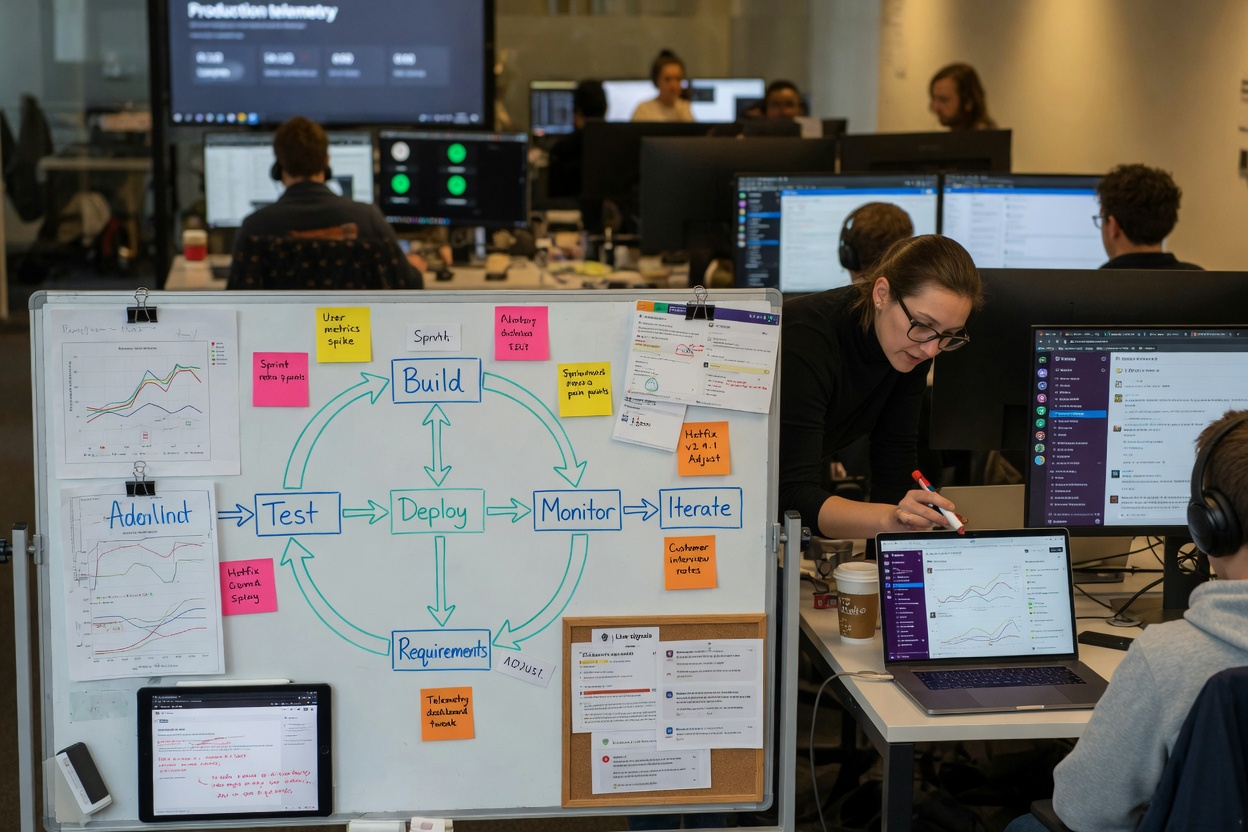
Check out my latest article: Loop engineering 101 https://t.co/VubwuEkpNL via @LinkedIn
— D (@phe0n1x) June 15, 2026
Best Practices for Successful Loop Engineering
To maximize the benefits of loop engineering while minimizing challenges, consider these practices:
- Start small and expand gradually: Begin with one or two feedback loops and progressively add more as teams gain confidence and capability
- Invest in observability: Comprehensive monitoring and logging infrastructure is essential for meaningful feedback
- Automate ruthlessly but thoughtfully: Focus automation efforts on repetitive, error-prone tasks while maintaining human judgment where it adds value
- Establish clear metrics: Define what success looks like for each loop and measure progress consistently
- Foster a learning culture: Treat failures as learning opportunities and encourage experimentation within appropriate guardrails
- Document and share knowledge: Ensure insights gained from feedback loops are captured and disseminated across teams
Conclusion
Loop engineering represents a powerful evolution in software development methodology, embracing the iterative, feedback-driven nature of modern software systems. By establishing multiple interconnected feedback loops throughout the development lifecycle, organizations can build better software faster while continuously improving their processes and capabilities.
The transition to loop engineering requires commitment, investment, and cultural change, but the benefits—including faster delivery, higher quality, better developer experience, and improved business outcomes—make it a worthwhile journey for teams serious about competing in today's fast-paced software landscape. As software systems grow increasingly complex and user expectations continue rising, the principles of loop engineering will become not just advantageous but essential for sustainable success.